
Kitchen Cabinet Cost in Malaysia: A 2026 Price Guide
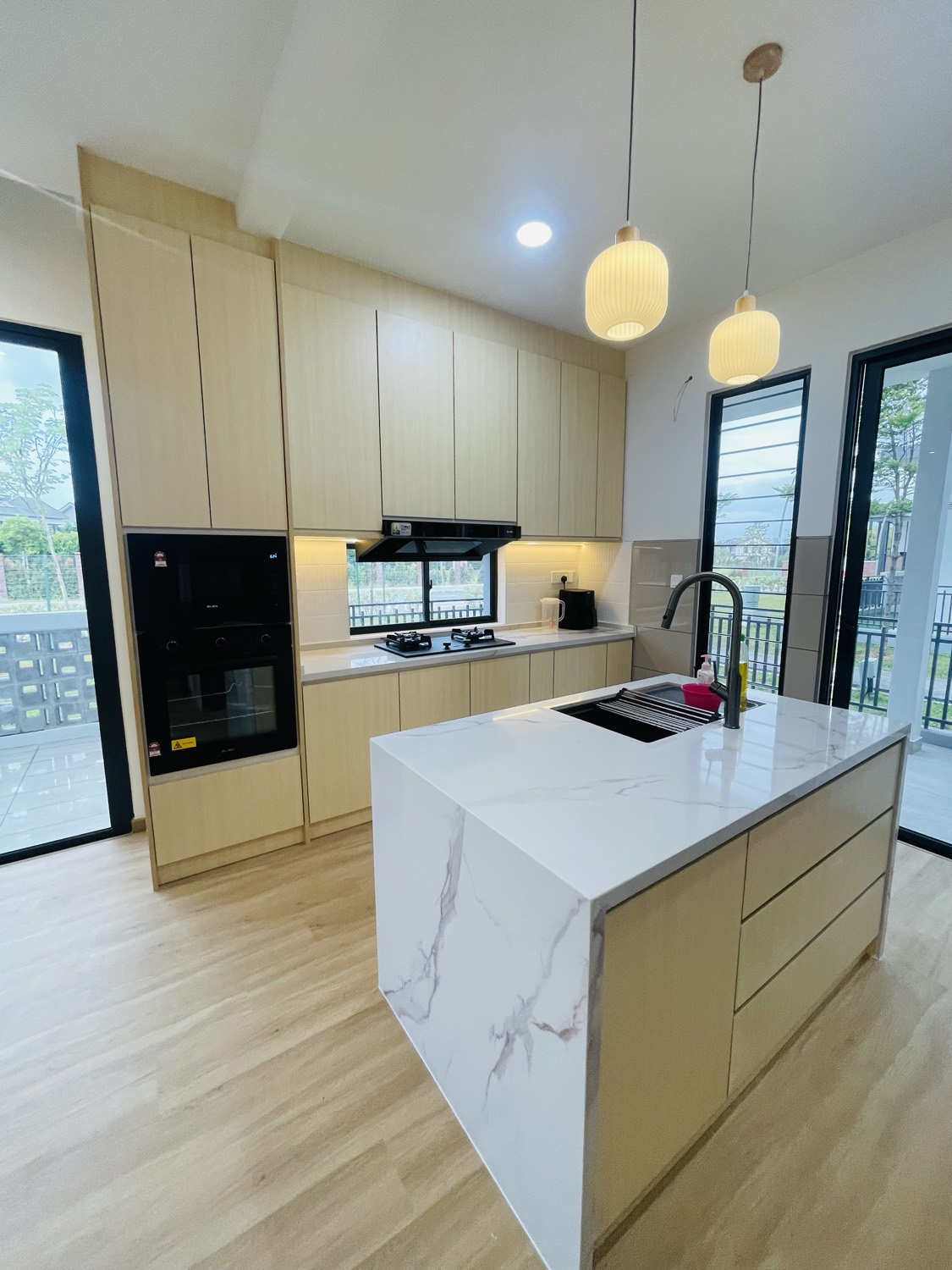
One of the first questions every Malaysian homeowner asks us is simple: how much does a kitchen cabinet actually cost? The honest answer is "it depends" — but that's not helpful when you're trying to budget. So here's a clear, no-nonsense breakdown based on real 2026 pricing for the Klang Valley and Negeri Sembilan.
The short answer: price per foot
In Malaysia, kitchen cabinets are usually priced per running foot (the length of the cabinet run along your wall). The single biggest factor is the door and carcass material. Here's what you can expect for turnkey supply-and-install:
| Material tier | Bottom cabinets | Top cabinets |
|---|---|---|
| Melamine / laminate (budget) | RM 200–450 / ft | RM 200–380 / ft |
| Acrylic / high-gloss 4G–5G (mid) | RM 450–700 / ft | RM 380–600 / ft |
| Solid plywood / PU spray (premium) | RM 600–1,200 / ft | RM 500–1,000 / ft |
A typical 10ft × 10ft kitchen has roughly 20 running feet of cabinetry. So a melamine kitchen usually lands around RM 8,000–15,000, while a premium solid-ply kitchen with spray finish can reach RM 25,000 and up.
Don't forget the countertop
The worktop is priced separately, also per running foot:
- Laminate / tiled: RM 90–150 / ft — the budget choice
- Solid surface: RM 120–250 / ft — seamless and repairable
- Quartz: RM 150–250 / ft — the popular all-rounder
- Sintered stone: RM 220–280 / ft — premium, heat- and scratch-resistant
What actually moves the price
- Material tier — this is 60–70% of the decision.
- Hardware — soft-close hinges and full-extension runners (Blum, Hettich) cost more but last far longer.
- Layout — L- and U-shaped kitchens have more corners, and corner units are pricier per foot.
- Tall units — pantry and oven columns run roughly double a base unit per foot.
- Site conditions — uneven walls, hacking old cabinets, or moving plumbing add labour.
Frequently asked
Is melamine durable enough for a kitchen?
Yes — modern MFC melamine with a plywood carcass handles daily Malaysian kitchen use well. The main enemy is standing water at joints, so good edge-banding and a quality countertop seal matter more than the door material itself.
Acrylic vs sintered stone — worth it?
Acrylic doors give that glossy, seamless look; sintered stone tops resist heat and scratches better than quartz. Both are nice-to-haves — spend on them after you've sorted good hardware and a solid carcass.