
Acrylic vs Melamine Kitchen Cabinets: Which Should You Choose?
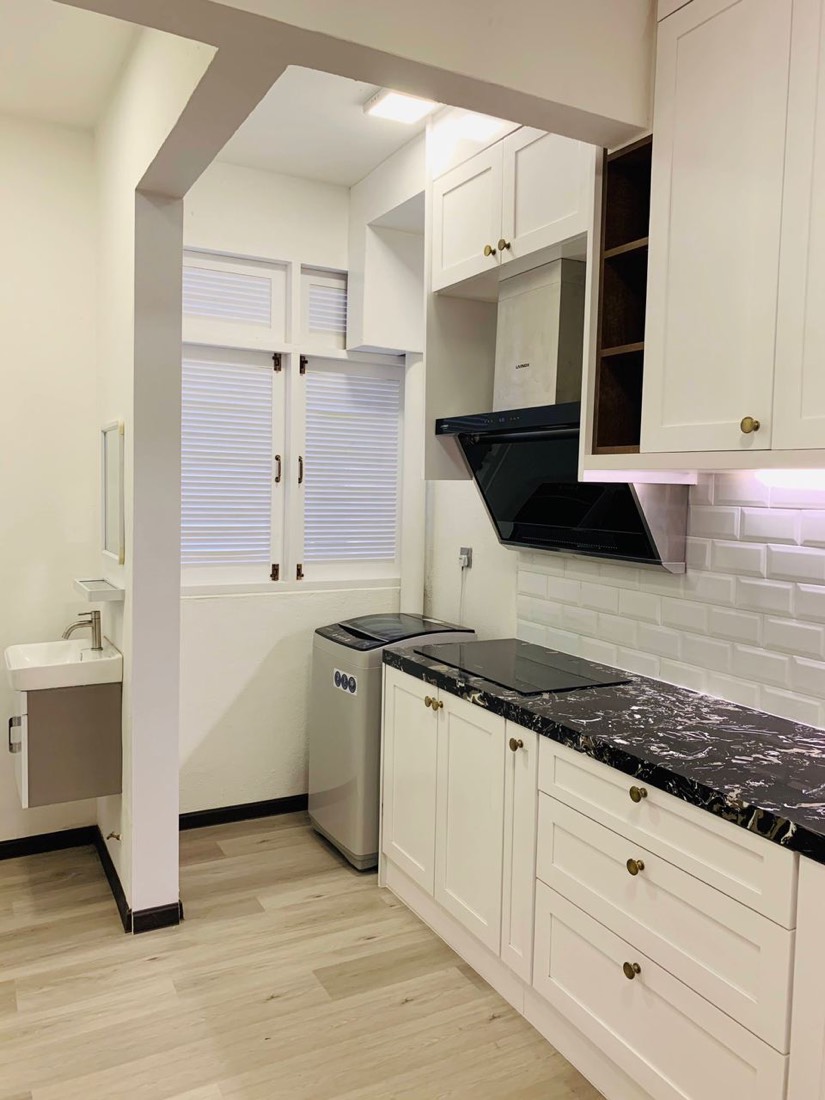
When you're choosing kitchen cabinet doors in Malaysia, two names come up again and again: melamine and acrylic. They can look similar in a showroom but behave quite differently at home — and there's a real price gap. Here's how to choose.
Melamine: the practical workhorse
Melamine (technically MFC — melamine-faced chipboard, often on a plywood carcass) is the most popular budget choice. It's a printed, laminated surface that comes in woodgrains and solid colours.
- Cost: roughly RM 200–450 per foot for base cabinets — the most affordable tier.
- Pros: durable, scratch-resistant, huge range of finishes, easy to clean.
- Cons: a matte, "flat" look; visible seams at edges; vulnerable to swelling if water sits at unsealed joints.
Acrylic: the glossy upgrade
Acrylic doors (often marketed as 4G or 5G) have a high-gloss, mirror-like face bonded to the board. They're the go-to for a modern, luxe kitchen.
- Cost: roughly RM 450–700 per foot — noticeably more than melamine.
- Pros: deep, seamless gloss; makes small kitchens feel bright and premium; colour-consistent.
- Cons: shows fingerprints and fine scratches on dark colours; needs gentler cleaning; higher price.
Side by side
| Melamine | Acrylic | |
|---|---|---|
| Look | Matte, natural | High-gloss, modern |
| Price / ft | RM 200–450 | RM 450–700 |
| Scratch resistance | Very good | Good (shows on dark tones) |
| Fingerprints | Hardly shows | Shows on dark gloss |
| Best for | Value, busy family kitchens | Statement, modern kitchens |
So which should you pick?
Choose melamine if you want the best value, a hard-wearing surface for a busy household, or a natural woodgrain look. Choose acrylic if a glossy, high-end finish is worth the premium and you don't mind a quick wipe-down to keep it fingerprint-free.
A common middle path: acrylic on the doors you see most (the island or top row) and melamine elsewhere, to lift the look without the full cost. Whatever the door, spend on good hardware and a solid carcass first — that's what determines how the kitchen feels in five years.